When Your Own Number Calls You Back: The Psychological Trap Behind Local Spoofing
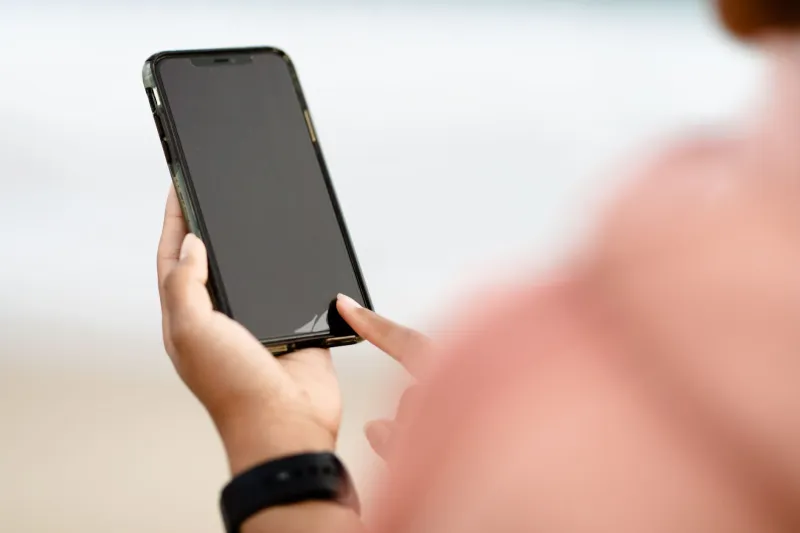
Imagine glancing at your phone and seeing your own number calling you. Not a similar number. Your number. Same area code, same prefix, same last four digits — all of it. Your first instinct probably isn't to laugh it off. It's confusion, maybe a little unease, and then that nagging question: should I answer?
That moment of hesitation is exactly what scammers are banking on.
Local number spoofing — sometimes called neighbor spoofing — has quietly become one of the most psychologically effective weapons in the spam caller's arsenal. And the more you understand how it works, the harder it is to fall for it.
What Is Neighbor Spoofing, Exactly?
Neighbor spoofing is a technique where robocallers manipulate the caller ID their targets see, swapping out their real number for one that looks locally familiar. Instead of an 800-number or an obvious out-of-state area code, the call appears to originate from your own neighborhood — same area code, often the same three-digit exchange.
In some cases, spammers take it a step further and clone your exact number, a tactic known as "same-number spoofing." This creates a genuinely disorienting experience, and it's surprisingly easy to pull off with the right VoIP tools and a willingness to break the law.
"The technology to spoof a caller ID has existed for decades, but the sophistication and scale at which bad actors are deploying it now is something different entirely," says cybersecurity researcher and telecom fraud consultant Dana Mireles. "They're not just picking random local numbers anymore. Some operations are scraping public databases, social media profiles, and even leaked contact lists to identify numbers with a social connection to the target."
In other words, the call that looks like it's coming from your neighbor's street? It might actually be engineered to look like it's coming from your neighbor specifically.
The Psychology Is the Point
Human brains are wired for pattern recognition and familiarity bias. When something looks familiar — a face, a logo, a phone number — we lower our guard instinctively. Marketers have understood this for decades. Scammers figured it out too.
Research on call answer rates tells a stark story. According to data compiled by multiple telecom analytics firms, calls from local or matching-prefix numbers are answered at rates two to three times higher than calls from toll-free or out-of-state numbers. For a robocall operation running millions of dials a day, that difference in pickup rate is enormous.
"I thought it was my dentist's office calling to confirm an appointment," says Marcus T., a 44-year-old IT professional from Columbus, Ohio, who answered a spoofed call last spring. "The number was one digit off from a local clinic I actually use. By the time I realized what was happening, they already had me saying 'yes' on a recorded line."
That recorded "yes" is its own trap — a tactic sometimes used to fabricate verbal consent for fraudulent charges. Marcus spent three months disputing unauthorized fees on his account.
The Technical Loopholes Keeping Spammers in Business
So why is this still happening? The FCC has taken steps to combat spoofing, most notably through the STIR/SHAKEN framework — a set of protocols designed to authenticate caller ID information across carrier networks. In theory, it should be much harder to fake where a call is coming from.
In practice, the gaps are significant.
STIR/SHAKEN works best when calls travel entirely through major, compliant US carriers. But a huge volume of robocall traffic enters the American phone network through smaller, less-regulated gateway providers — often international ones — that don't fully implement authentication standards. Once a spoofed call enters the network through one of these weak points, it can ride the rest of the way to your phone without triggering any red flags.
"Think of it like airport security," explains Mireles. "The big hubs have full screening. But if you enter through a smaller regional airport with looser protocols, you're already past the checkpoint by the time you connect to the major network."
The FCC has been pushing carriers to cut off these "gateway" providers, and enforcement actions have increased. But the sheer number of VoIP providers operating globally — some specifically designed to facilitate this kind of traffic — makes comprehensive enforcement feel like a game of whack-a-mole.
Real People, Real Consequences
The victims of neighbor spoofing aren't just mildly annoyed. Many describe a lasting erosion of trust in their own phones.
Linda G., a retired school administrator from suburban Atlanta, says she stopped answering calls from any number she doesn't immediately recognize — including numbers from her own area code. "My daughter's school called me about a field trip permission slip and I ignored it twice because the number looked like spam," she says. "That's the part nobody talks about. I'm now suspicious of everything."
This is one of the most insidious long-term effects of local spoofing: it poisons the well for legitimate local calls. Doctors' offices, schools, local businesses, and government agencies all rely on people picking up calls from unfamiliar local numbers. When scammers colonize that trust, everyone suffers.
According to a 2023 consumer survey by a major telecom analytics firm, nearly 60% of Americans say they no longer answer calls from unknown numbers — even local ones. That number has climbed steadily over the past five years, tracking closely with the rise in neighbor spoofing complaints filed with the FCC.
What You Can Actually Do About It
The honest answer is that no single solution eliminates the threat completely. But layering your defenses makes a real difference.
Use a call-blocking app with a live spam database. Tools that pull from crowdsourced and carrier-reported spam lists can flag suspicious numbers in real time, even when those numbers are spoofed local ones. The more users reporting the same number, the faster it gets flagged.
Enable carrier-level spam filtering. Most major US carriers — AT&T, Verizon, T-Mobile — now offer some form of built-in spam detection, either free or as part of a subscription. These services operate at the network level, before the call even reaches your phone.
Don't trust caller ID alone. If someone calls claiming to be your bank, your doctor, or a government agency, hang up and call back using a number you look up independently. Legitimate organizations won't penalize you for verifying.
Register with the Do Not Call Registry — but manage your expectations. It helps with legitimate telemarketers, but criminal spoofing operations aren't exactly checking the list before they dial.
Report suspicious calls. File complaints with the FCC at fcc.gov/consumers/guides/filing-informal-complaint and with the FTC at reportfraud.ftc.gov. Volume matters — the more reports tied to a specific number or operation, the faster enforcement can act.
The Bigger Picture
Neighbor spoofing isn't just a technical problem. It's a trust problem. Every time a scammer successfully disguises themselves as your community, they're chipping away at the social infrastructure that makes phone communication useful in the first place.
The technology to fight back exists and is improving. But until authentication standards are universally enforced and the loopholes exploited by bad actors are systematically closed, the burden still falls largely on individual users to stay sharp.
Your phone is supposed to connect you to the people and places that matter. Don't let scammers turn your own area code into a weapon against you.