Phone Anxiety Is Real — And Spam Calls Built It
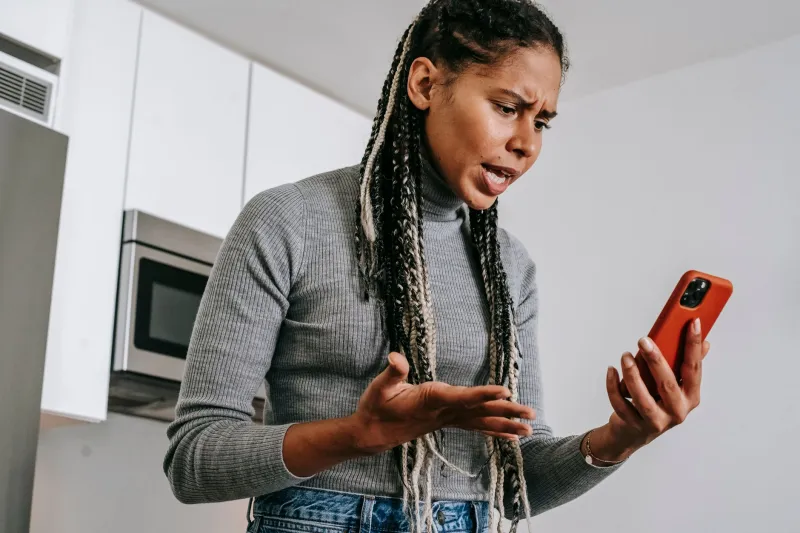
There's a good chance you've done this recently: your phone rings, you don't recognize the number, and you just... let it go. No second thought. Straight to voicemail — or nowhere at all if the caller doesn't bother leaving one.
That reflex feels rational. And honestly, most of the time it is. But something quietly uncomfortable has happened over the past several years. That instinct to ignore unknown calls has grown into something bigger. For a lot of people, it's become a near-total avoidance of the phone itself. And that's where things get complicated.
When a Coping Mechanism Becomes a Problem
Psychologists have a name for what's happening here. Conditioned avoidance is when repeated negative experiences — unwanted calls, aggressive robotic voices, near-miss scam attempts — train the brain to treat a stimulus as dangerous. Your phone rings. Your nervous system braces. Even if the call turns out to be your mom, the anxiety showed up first.
This isn't a niche experience. A 2023 survey from Truecaller found that nearly 70% of Americans said they don't answer calls from numbers they don't recognize. That number has been climbing steadily for years. And while some of that is simple inconvenience, a growing portion of it reflects something more like low-grade dread.
Spam callers didn't just annoy us. They rewired our relationship with the phone.
The Calls You're Missing — And What They're Costing You
Here's where the "just don't answer" strategy starts to fall apart.
Your doctor's office calls to confirm an appointment. You miss it. They cancel the slot. You wait three more weeks.
A recruiter calls about a job you applied for two months ago and had nearly forgotten. You don't pick up. They move on to the next candidate.
Your kid's school calls because there's been an incident. You see the unfamiliar local number and assume it's a spoofed spam call. You find out hours later.
These aren't hypotheticals. They're the kinds of scenarios playing out across the country every single day, in every demographic. The robocall epidemic has effectively made the phone unreliable as a communication tool — not because the technology broke, but because trust did.
And the cost isn't just measured in missed appointments. Missed calls from financial institutions can mean delayed fraud alerts. Missed calls from pharmacies can mean prescription gaps. In a country where critical information still travels by phone — especially in healthcare, legal, and employment contexts — checking out of that channel carries real consequences.
It's Not Just Anxiety. It's Learned Helplessness.
There's another layer to this worth talking about: a lot of people feel like there's nothing they can do about it.
They've tried answering and hanging up. They've tried blocking individual numbers, only to have new ones appear the next day. They've reported calls to the FTC. They've downloaded apps that helped a little but didn't fix it. Eventually, many people arrive at the same conclusion: the only way to stop getting burned is to stop touching the stove.
That's learned helplessness — the psychological state where repeated failed attempts to solve a problem lead to giving up entirely, even when solutions exist. It's the same mechanism that makes people stop trying to fix a bad Wi-Fi router after the fifth reboot. Except with spam calls, the stakes are higher.
This matters because learned helplessness is self-reinforcing. The less you engage with your phone, the more you miss, the more you associate the phone with stress and missed connections, and the more avoidant you become. It's a loop, and spam callers benefit from every turn of it.
Who Gets Hit Hardest
It's worth pointing out that this problem doesn't hit everyone equally.
Older Americans, who tend to rely more heavily on phone calls for healthcare coordination and family communication, face an especially brutal tradeoff. They're also disproportionately targeted by scam robocalls, which means they have more reason to be wary — but more to lose when they avoid the phone entirely.
Job seekers are another group that takes a real hit. The hiring process in the US still runs heavily on phone calls, especially in industries like healthcare, retail, trades, and logistics. If you're applying for jobs while also dodging spam, you're essentially playing a guessing game with every unknown number. Get it wrong a few times, and you start missing real opportunities.
People managing chronic health conditions, who might receive calls from specialists, insurance coordinators, or home health services, face similar friction. When every call feels like a coin flip between a real provider and a Medicare scam, disengagement becomes a health risk.
The Social Fallout Nobody Talks About
Beyond the practical stuff, there's a quieter social cost accumulating here.
Phone calls used to be how people stayed connected — especially across generations, distances, and demographics that don't communicate primarily through apps. Grandparents call. Old friends call. People who aren't on Instagram or TikTok call. When phone anxiety makes you unreachable, those relationships quietly fray.
There's also a broader erosion of what you might call phone culture. The informal check-in call, the quick catch-up, the spontaneous "hey, are you around?" — all of that has been chilled by the expectation that an unrecognized ring is probably someone trying to steal something from you. Spam callers didn't just interrupt our days. They made the phone feel hostile.
Breaking the Loop
The good news — and there is some — is that learned helplessness isn't permanent. The loop can be interrupted.
The most effective intervention is removing the uncertainty. When your phone can accurately flag or block spam before it rings, the Pavlovian dread response starts to fade. You answer an unknown number and it's actually someone real. You do it again. Slowly, the association between "incoming call" and "incoming threat" weakens.
Call-blocking tools, carrier-level spam filters, and apps that use real-time spam databases have all gotten meaningfully better in the last few years. They're not perfect — no system catches everything — but they've reached a point where the signal-to-noise ratio is genuinely improving for people who use them.
The bigger shift, though, is cultural. People need to understand that phone avoidance isn't a personal quirk — it's a predictable response to a systemic problem. Naming it matters. Recognizing that you've been conditioned to distrust your own phone is the first step toward reclaiming it.
Spam callers want you disengaged. They want you uncertain. They want you to either pick up in a moment of confusion or tune out so completely that you miss the calls that actually matter.
Neither outcome works for you. Both work for them.
The answer isn't to stop using your phone. It's to make the phone worth using again.