They Know When You're Home: The Calculated Science of Spam Call Timing
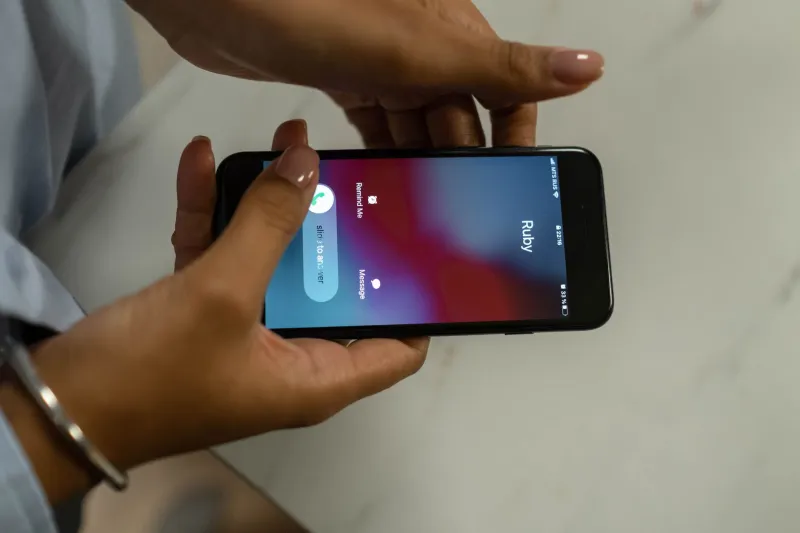
There's a reason your phone seems to blow up right when you're sitting down to dinner or just getting back from a lunch break. It's not a coincidence. It's a strategy — and a surprisingly sophisticated one.
Spam callers have always had one core problem: most people don't answer their phones. Answer rates for unknown numbers hover somewhere between 20% and 30% on a good day, which means for every campaign a robocall operation runs, the overwhelming majority of dials are wasted. The solution they've landed on isn't better spoofing or slicker scripts. It's timing.
We pulled data from CallBuster's call logs — aggregated and anonymized across millions of flagged calls — and what we found paints a pretty clear picture of how these operations think about your schedule.
The Peak Windows: When Spammers Come Hunting
The busiest spam call windows we see in our data cluster around a few predictable zones. The first is the late morning stretch, roughly 10 a.m. to noon in each local time zone. The second is the early-to-mid afternoon window between 1 p.m. and 3 p.m. And then there's the early evening slot — 5 p.m. to 7 p.m. — which consistently shows some of the highest call volumes we track.
Those times aren't random. They map almost perfectly onto moments when people are likely to be physically available but mentally a little off-guard. Mid-morning is when many remote workers step away from their desks. Early afternoon follows lunch, when attention dips. Early evening catches people transitioning from work mode to home mode — a mental state where the instinct to just answer and deal with it tends to be stronger.
Monday and Tuesday also skew higher in our data than the rest of the week. There's a reasonable explanation for that too: people tend to be more responsive to unfamiliar calls early in the week, when they're in task-completion mode and more likely to assume an unknown number might be something work-related they need to handle.
The Algorithm Behind the Dial
Modern robocall campaigns aren't run by someone manually picking up a handset. They're executed by auto-dialing platforms that can place thousands of calls per minute, and the smarter operations have layered behavioral logic on top of the raw dial engine.
Think of it like an email marketing platform, but for phone calls. These systems track which numbers answered, at what time, on which day, and what the outcome was. If your number picks up on a Tuesday at 11:45 a.m., that data point gets logged. The next campaign targeting your number will weight that time slot higher.
This is part of why — once you've answered a spam call even once — you tend to get more of them. You've just told their system something useful: that you answer your phone. Your number gets flagged as a higher-probability target and cycled into future campaigns more aggressively.
Behavioral scientists call this kind of feedback loop operant reinforcement. The system is essentially trained by your behavior, the same way a social media algorithm learns what content keeps you scrolling. The difference is that in this case, you're the product being optimized against.
Spoofing and Time Zone Stacking
One tactic that shows up clearly in our data is what we call time zone stacking. A single campaign will roll through US time zones sequentially, hitting Eastern numbers during their peak window, then shifting to Central, then Mountain, then Pacific — all within the same few-hour block. This lets an operation run one campaign that catches the late-morning window for virtually the entire country without having to schedule multiple separate runs.
Local number spoofing amplifies this. When a call comes in that looks like it's from your own area code — or even your own exchange — you're statistically more likely to answer. Pair that with hitting you during a high-answer window, and the conversion rate climbs meaningfully. Our data shows that spoofed local numbers placed during peak windows get answered at roughly double the rate of out-of-state numbers placed during off-peak hours.
That's not a guess. That's a tested, optimized strategy.
Why Weekends Are Different (And Sometimes Worse)
Weekend patterns are interesting because they diverge from the weekday playbook. Saturday mornings — particularly between 9 a.m. and 11 a.m. — see a notable spike in certain categories of scam calls, especially those targeting older adults. The reasoning tracks: weekends are when people have more unstructured time, are less likely to be in a professional mindset that prompts skepticism, and may be more relaxed about picking up an unknown number.
Sunday evenings also show elevated activity in our logs, particularly for calls spoofing government agencies or financial institutions. That pre-Monday anxiety — the mental gear-shift back toward work and responsibilities — appears to make people slightly more susceptible to calls that imply urgent action is needed.
What You Can Do With This Information
Knowing the playbook doesn't automatically protect you, but it does give you an edge. A few practical takeaways:
Let peak-window calls go to voicemail. If your phone rings between 10 a.m.–noon or 5–7 p.m. from an unknown number, the statistical odds that it's spam are higher than average. Legitimate callers leave messages.
Don't answer just to hang up. Picking up and immediately disconnecting still registers as an answer in many auto-dialer systems. You've just confirmed your number is active.
Use a call-blocking app that updates in real time. Static blocklists go stale fast. Spam operations rotate numbers constantly, so you need a tool that's pulling fresh data — not one that was last updated six months ago.
Turn on Silence Unknown Callers if you can. It's not perfect, but it removes the temptation entirely during high-volume windows. If someone actually needs to reach you, they'll leave a message or text.
The Bigger Picture
What makes this whole ecosystem so frustrating is how deliberate it is. These aren't accidental intrusions — they're engineered ones. Someone built a system that studies your habits, finds your weak spots, and exploits them at scale. The fact that it feels random is part of the design. Randomness is disorienting. It keeps you guessing, which keeps you answering.
The best defense is removing the guesswork on your end. Know the patterns, use the tools, and stop letting their algorithm run on your behavior. Your phone should work for you — not for whoever's on the other end of a robocall campaign they built to catch you off guard.