Ringing Yourself Into the Ground: The Very Real Health Toll of Constant Spam Calls
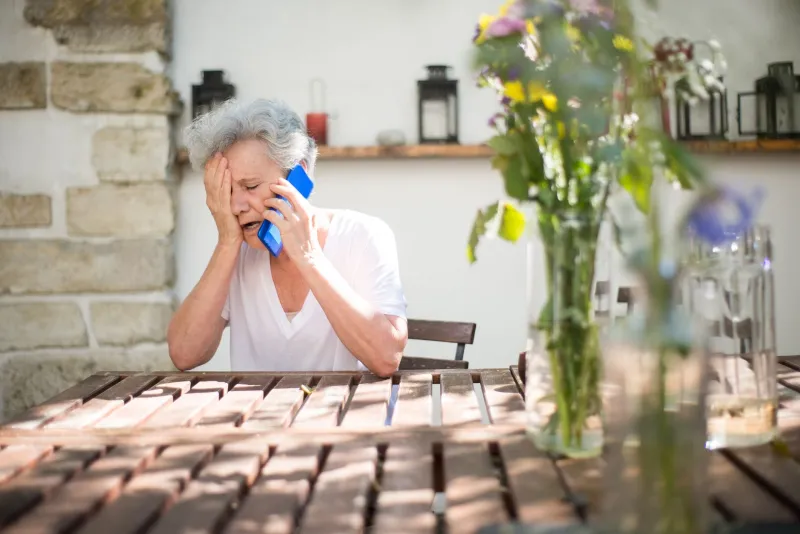
Most people think of spam calls as a nuisance. Something to roll your eyes at, hit "decline," and move on. But what if that buzzing rectangle on your nightstand is doing something far more insidious than wasting thirty seconds of your day? What if it's slowly, methodically grinding down your health?
That's not hyperbole. A growing body of research — plus the lived experiences of millions of Americans — suggests that chronic spam call interruptions are a genuine medical concern. We're talking disrupted sleep cycles, elevated cortisol, creeping anxiety, and in some cases, measurable cardiovascular stress. The robocall industry has built a machine designed to grab your attention at all costs. Turns out, those costs can be biological.
What Happens to Your Brain When Your Phone Goes Off at 2 a.m.
Let's start with the obvious entry point: nighttime. According to sleep specialists, the human brain doesn't simply "pause" during sleep. It cycles through distinct stages — light sleep, deep sleep, and REM — each serving a critical restorative function. Disrupting those cycles, even briefly, has consequences that ripple into your waking hours.
Dr. Priya Nanda, a sleep medicine physician based in Chicago, put it plainly in a recent interview: "A single unexpected noise event at the wrong point in a sleep cycle can push someone out of slow-wave sleep entirely. If that happens repeatedly over weeks or months, we start seeing real deficits in cognitive function, mood regulation, and immune response."
Spam calls are uniquely disruptive because they're unpredictable. Your brain can habituate to consistent background noise — a fan, street traffic — but it cannot easily habituate to a random, intermittent alert. That unpredictability keeps your nervous system on low-level alert, even during hours when you should be deeply at rest.
For people who leave their phones on at night (which, according to Pew Research, is the majority of American adults under 50), a 3 a.m. robocall isn't just an annoyance. It's a neurological event.
The Cortisol Connection Nobody's Talking About
Here's where it gets more alarming. When your phone rings unexpectedly — especially during sleep or a high-focus task — your body interprets it as a potential threat. The amygdala fires. Your adrenal glands release cortisol, the primary stress hormone. Your heart rate ticks up. Blood pressure follows.
In a healthy context, that response is adaptive. It's your fight-or-flight system doing its job. But when it's triggered five, ten, twenty times a day by spam calls? That's chronic low-grade stress activation. And chronic cortisol elevation has a well-documented rap sheet: weight gain, suppressed immune function, increased risk of type 2 diabetes, memory impairment, and yes — cardiovascular disease.
"We know that repeated, uncontrollable stressors are among the most damaging to long-term health," says Dr. Marcus Ellroy, a neurologist who has studied stress response patterns in urban populations. "The keyword is 'uncontrollable.' When people feel they can't stop something from happening to them, the psychological and physiological toll compounds significantly."
That word — uncontrollable — is exactly how most spam call victims describe their experience.
Real People, Real Consequences
Tamara W., a 44-year-old nurse from Atlanta, started receiving an avalanche of spam calls after her number appeared on a data broker list. At peak, she was getting 15 to 20 calls per day.
"I stopped sleeping with my phone in the bedroom, but I was worried I'd miss something important from my kids' school," she says. "So I'd bring it back in, and then I'd lie there dreading the next call. Even when it didn't ring, I was waiting for it to ring. My doctor eventually put me on medication for anxiety. I genuinely believe the calls were a major trigger."
Tamara's story isn't unusual. Online communities dedicated to spam call victims are filled with similar accounts — people describing hypervigilance, irritability, difficulty concentrating, and a pervasive sense of being under siege in their own homes.
James P., a retired schoolteacher in rural Ohio, describes what he calls "phantom ring anxiety" — the sensation that his phone is vibrating even when it isn't. "My body just started anticipating the calls," he says. "That's when I knew something was genuinely wrong."
Phantom vibration syndrome, as it's known in clinical literature, has been documented in smartphone users broadly, but researchers note it's significantly more prevalent among people who receive high volumes of unwanted calls.
The Cardiovascular Angle
The heart doesn't love surprises. Repeated startle responses — the physiological jolt you experience when your phone unexpectedly rings — cause momentary spikes in blood pressure and heart rate. For most healthy adults, these spikes resolve quickly and cause no lasting harm.
But for people with existing hypertension, heart disease, or arrhythmia, the calculus changes. Cardiologists have begun flagging environmental stressors, including chronic phone interruptions, as underappreciated contributors to cardiovascular events in at-risk patients.
A 2022 study published in the Journal of the American Heart Association found that people who reported high levels of "digital interruption stress" — defined as frequent, unwanted digital alerts — had measurably higher resting heart rates and blood pressure than low-interruption peers, even after controlling for other lifestyle factors.
Spam calls are, by design, the most aggressive form of digital interruption. They don't wait for a convenient moment. They don't respect sleep schedules or dinner tables or doctor's offices.
So What Do You Actually Do About It?
The good news — and there genuinely is good news here — is that this problem is solvable. Not perfectly, not overnight, but meaningfully.
Use a call-blocking app with active spam detection. Passive blocklists are better than nothing, but apps that use real-time crowd-sourced data and AI-driven pattern recognition can intercept spoofed numbers and emerging scam campaigns before they reach your phone. CallBuster's detection engine, for instance, cross-references live threat data so that even freshly minted spam numbers get flagged before they ring through.
Enable Do Not Disturb with contact exceptions. Both iOS and Android let you silence all calls except from people in your contacts list. This is a simple, free, and highly effective overnight strategy. Your kids' school, your doctor, your family — they're in your contacts. Robocallers aren't.
Register with the FTC's Do Not Call Registry. It won't stop scammers who ignore the law (most of them), but it does reduce legitimate telemarketing volume, which clears some of the noise.
Report spam calls when you receive them. The FTC's complaint database at reportfraud.ftc.gov is used to identify patterns and pursue enforcement. Every report matters.
Talk to your doctor if you're experiencing symptoms. If you've noticed worsening sleep, heightened anxiety, or cardiovascular symptoms that coincide with a period of heavy spam call activity, that connection is worth raising with a healthcare provider. You're not imagining it.
The Bottom Line
The telemarketing and robocall industry generates billions of dollars annually, in part by externalizing its costs onto you — your time, your attention, your battery life, and increasingly, your health. The average American received 18 spam calls per month in 2023, according to industry tracking data. For people on compromised number lists, that figure can be ten times higher.
This isn't just a tech problem. It's a public health problem. And the first step toward fixing it is recognizing that hitting "decline" isn't a solution — it's a symptom of a system that's broken and needs real tools to fight back.
Your phone should be working for you. Not against you. And definitely not against your sleep.