Your Phone Bill Is Lying to You — And Spam Callers Are Why
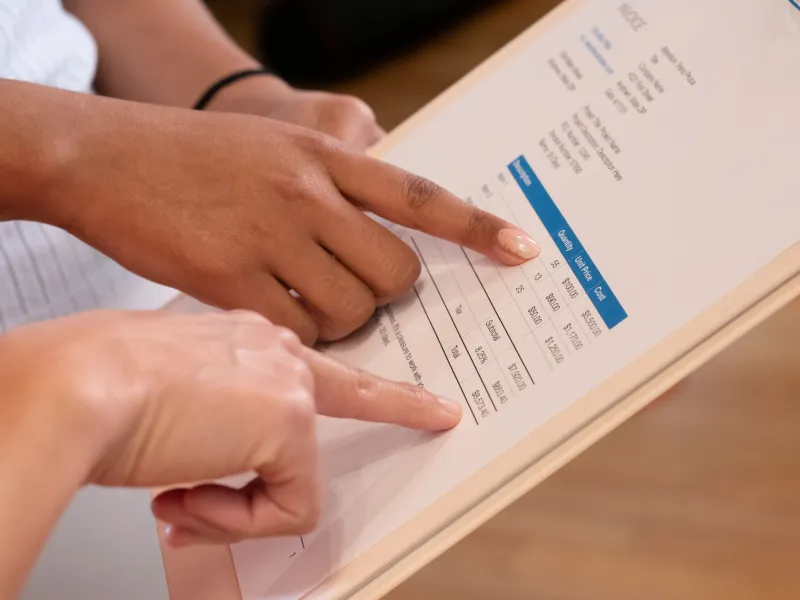
Most Americans glance at their phone bill, wince at the total, and move on. It's just one of those fixed costs of modern life, right? Maybe. But if your number is getting hammered by spam calls — and statistically, it almost certainly is — a measurable slice of that bill isn't going toward anything you actually chose to pay for. It's a quiet tax, collected without your consent, and the system collecting it has very little incentive to tell you it exists.
Let's break down exactly how that works.
The Myth of the "Free" Ignored Call
Here's the assumption most people carry around: if you don't answer a spam call, it costs you nothing. You saw the unknown number, let it ring out, maybe blocked it — done. No harm, no foul.
That's not quite right.
Every inbound call, answered or not, triggers a series of network processes on your carrier's infrastructure. Signal routing, caller ID lookup, spam-scoring algorithms, voicemail handoff — these aren't passive events. They consume real computational resources, and in many cases, they touch your data connection in ways that aren't always obvious depending on your plan and device settings.
For most people on unlimited plans, this stays invisible. But for anyone still on a tiered data plan — and tens of millions of Americans are — those micro-transactions add up. Spam call volume in the US regularly exceeds four billion calls per month. Even tiny per-call data costs, multiplied across that scale, become a genuinely significant number.
Carrier Filtering: The Feature You're Already Paying For (Sometimes)
Here's where it gets a little more frustrating. In response to the robocall epidemic, all four major US carriers — Verizon, AT&T, T-Mobile, and their various subsidiaries — have rolled out call-filtering and spam-blocking services. Some version of this is now baked into most postpaid plans. But the premium tiers? Those cost extra.
AT&T's ActiveArmor advanced tier runs a few dollars a month. Verizon's Call Filter Plus is similarly priced. T-Mobile's Scam Shield Premium adds to your bill too. These aren't enormous charges individually, but consider what's actually happening: carriers are charging you to defend against a problem that exists, in part, because they haven't fully committed to fixing it at the network level.
The FCC has pushed for STIR/SHAKEN — an authentication framework designed to verify caller ID and flag spoofed numbers before they ever reach your phone. Carriers were mandated to implement it. And they have, technically. But implementation quality varies, enforcement has been inconsistent, and the robocall volume hasn't dropped anywhere near as dramatically as the rollout was supposed to produce. Meanwhile, the premium filtering subscriptions keep selling.
You're essentially paying a monthly fee to partially clean up a mess you didn't make.
Third-Party Apps: Useful, But Not Free
Beyond carrier-level tools, millions of Americans have turned to third-party call-blocking apps — Hiya, Nomorobo, RoboKiller, and similar services. These apps genuinely work better than most built-in carrier options, and for heavy spam targets, they're often worth it. But they also represent another line item.
Most of these services run on a subscription model, typically between $25 and $50 per year. That's not a lot in isolation. But stack it on top of your carrier's premium filtering tier, factor in the marginal data costs, and the annual tab for defending your own phone number starts to look less trivial.
For a household with two or three lines, you could easily be spending $150 or more per year — not on anything useful, just on blocking calls you never wanted in the first place.
Where the Money Actually Flows
This is the part that tends to make people genuinely annoyed once they see it laid out clearly.
Robocall operations are cheap to run. A sophisticated spam outfit can blast millions of calls per day for a fraction of a cent per call, using VoIP infrastructure that's difficult to trace and easy to relocate when regulators come knocking. The cost to the spammer is minimal. The cost to the system — and ultimately to consumers — is not.
Carriers transmit those calls because they're paid to transmit calls. That's the business. Every call that routes through their network generates revenue, even if it's fractions of a cent. At robocall volumes, fractions of a cent become real money. There's no direct financial incentive for a carrier to aggressively throttle spam at the network level when doing so means turning away volume — and then turning around and selling you a subscription to handle it instead.
The FTC and FCC have levied some significant fines against robocall operations over the years. But enforcement is slow, penalties are often uncollected from operators who simply dissolve and re-form under new names, and the underlying economics haven't fundamentally shifted.
Consumers sit at the end of this chain, absorbing costs that originate from a problem nobody upstream has a strong enough incentive to fully solve.
What You Can Actually Do About It
This isn't a hopeless situation — it just requires being deliberate about it.
Audit your current plan. Check whether you're already subscribed to a carrier filtering tier you didn't knowingly sign up for. Some carriers have bundled these into plan upgrades without making it obvious. If you're paying for it and it's not working well, that's worth a call to customer service.
Compare third-party options before committing. Free tiers on apps like Hiya or the basic version of RoboKiller can handle a significant chunk of spam without a subscription. Test the free version before paying for premium.
Use your phone's built-in tools more aggressively. Both iOS and Android have gotten meaningfully better at silence-unknown-callers features. It's a blunt instrument, but for people who get most legitimate calls from saved contacts, it works.
Report spam calls. The FTC's Do Not Call registry and complaint system (donotcall.gov) actually does feed into enforcement actions. It's not instant, but volume of reports matters.
Check your data usage after heavy spam periods. If you're on a tiered plan and your data usage seems higher than expected during a month when you noticed a lot of spam activity, that correlation is worth investigating with your carrier.
The Bottom Line
Spam calls aren't just annoying background noise. They're a functioning financial ecosystem, and consumers are one of its primary funding sources — usually without realizing it. Every premium filtering subscription, every extra data charge, every minute spent managing blocked numbers represents a real transfer of money from your pocket into a system that profits from the problem persisting.
The fix isn't entirely in your hands, and that's worth being honest about. But knowing where the costs come from is the first step toward minimizing how much of your money ends up subsidizing a problem you never asked for.